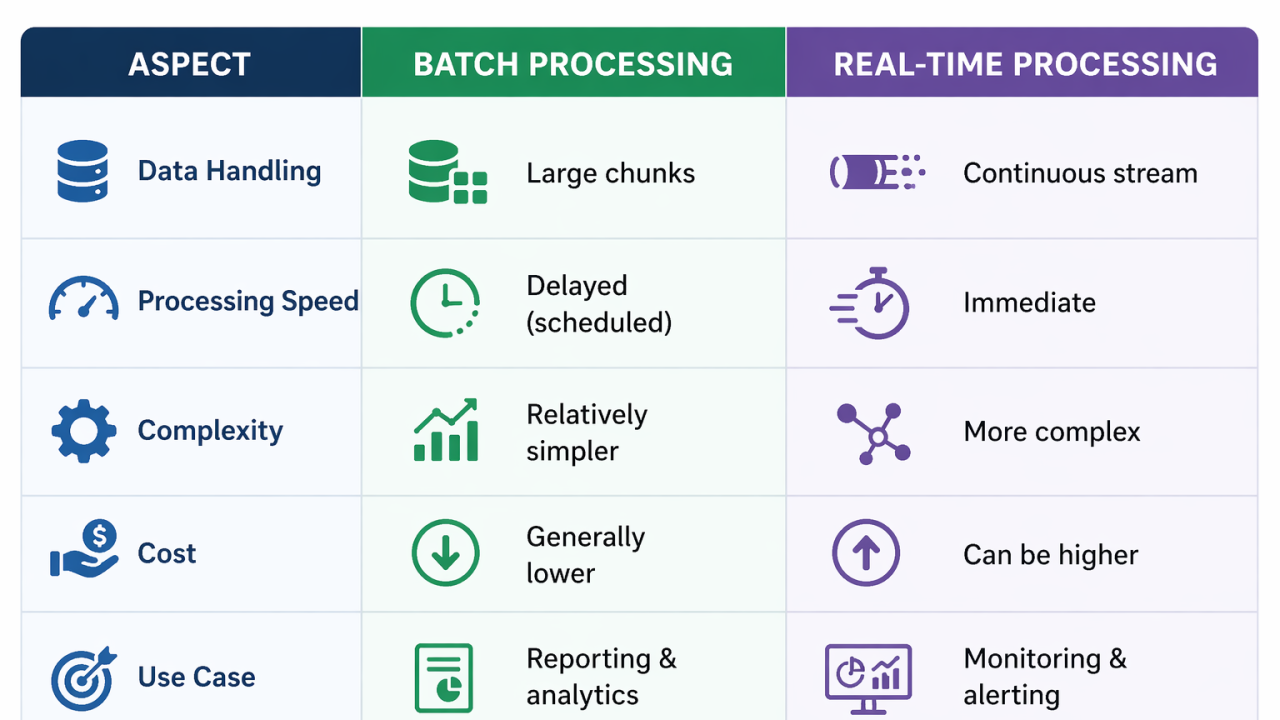
In today’s data-driven ecosystem, organizations are no longer just collecting data—they are expected to process, analyze, and act on it efficiently. One of the most important architectural decisions in any data platform is choosing between batch processing and real-time processing. With Microsoft’s Microsoft Fabric, this decision becomes less restrictive because the platform is designed to support both paradigms seamlessly within a unified ecosystem. 🔍 What is Batch Processing? Batch processing refers to handling data in large chunks at scheduled intervals. Instead of processing data as it arrives, the system collects it over time and processes it together. 📌 Key Characteristics: High throughput for large datasets Scheduled execution (hourly, daily, weekly) Cost-efficient for non-urgent workloads Suitable for historical analysis 💡 Real-World Use Cases: Daily sales and revenue reports Data warehouse ETL pipelines Monthly financial closing reports Data aggregation for business intelligence ⚙️ In Microsoft Fabric: Batch processing is typically implemented using: Data Pipelines Lakehouses Dataflows Gen2 These tools allow you to ingest, transform, and store large volumes of data efficiently. ⚡ What is Real-Time Processing? Real-time processing focuses on processing data instantly as it is generated, enabling immediate insights and actions. 📌 Key Characteristics: Low latency (near-instant processing) Event-driven architecture Continuous data flow Supports time-sensitive decision making 💡 Real-World Use Cases: Live dashboards (e.g., monitoring sales or traffic) Fraud detection systems IoT sensor monitoring Stock market analytics ⚙️ In Microsoft Fabric: Real-time processing is powered through: Event Streams Streaming datasets Real-Time Analytics (KQL-based processing) This allows organizations to react instantly to incoming data rather than waiting for scheduled updates. 🔄 Batch vs Real-Time: A Practical Comparison AspectBatch ProcessingReal-Time ProcessingData HandlingLarge chunksContinuous streamProcessing SpeedDelayed (scheduled)ImmediateComplexityRelatively simplerMore complexCostGenerally lowerCan be higherUse CaseReporting & analyticsMonitoring & alerting 🧠 The Real Power: Hybrid Architecture in Fabric The true strength of Microsoft Fabric lies not in choosing one over the other—but in combining both. 🔗 Example Hybrid Scenario: Real-time dashboards track live sales performance Batch pipelines generate end-of-day consolidated reports This hybrid approach ensures: Immediate visibility into operations Accurate and optimized long-term analytics 🎯 Key Takeaways There is no universal answer—the choice depends on your use case Use batch processing when latency is not critical Use real-time processing when instant insights are required Leverage Microsoft Fabric’s unified architecture to combine both 🚀 Final Thought Modern data platforms are evolving beyond rigid architectures. The ability to adapt processing strategies based on business requirements is what sets advanced systems apart. Microsoft Fabric empowers data professionals to build flexible, scalable, and intelligent data solutions—whether the need is speed, scale, or both.
No comments yet.