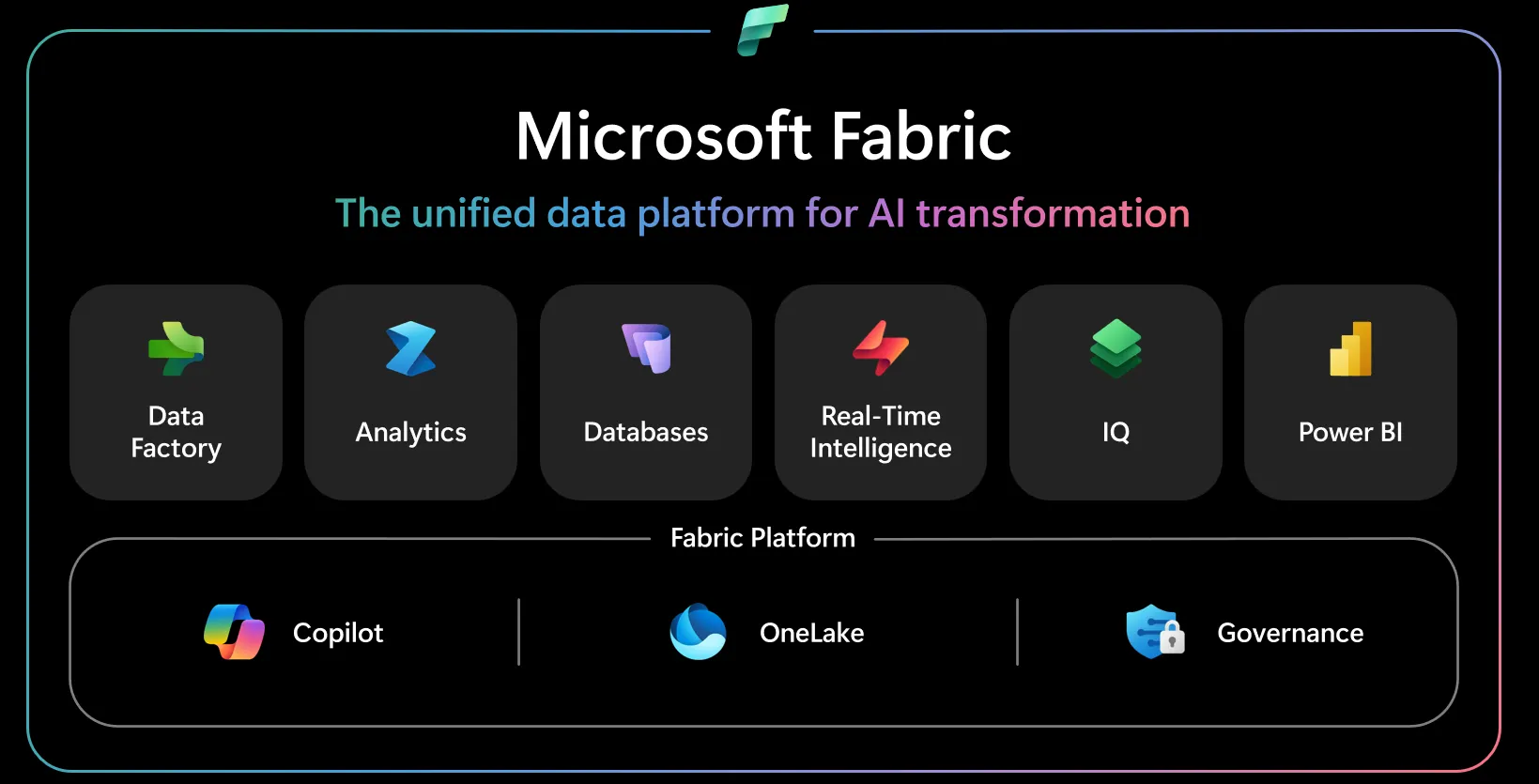
Problem: In most companies, data is handled using multiple tools. For example, one tool is used to collect data, another for storage, another for processing, and another for reporting. This creates problems like: Too many tools to manage Complex integrations between systems Data duplication and inconsistency More time spent on setup instead of actual analysis Because of this, the overall analytics process becomes slow and difficult. Solution in Microsoft Fabric: Microsoft Fabric solves this problem by providing an all-in-one platform where everything is available in a single place. It combines data ingestion, storage, transformation, and visualization into one unified system. So instead of using different tools separately, you can perform the entire data workflow inside Fabric. This makes the process simpler, faster, and easier to manage. For example: Example : Modern Approach (Using Fabric) Company: Flipkart (example of modern unified approach) Scenario: Flipkart collects similar data — orders, users, products, payments. Become a Medium member How they can use Microsoft Fabric: Ingest data using Data Factory pipelines Store everything in OneLake (single storage) Transform data using Notebooks or Dataflows Build dashboards directly in Power BI Benefits they get: No need to move data across systems Faster data processing Simpler architecture Real-time insights 🔥 Simple Comparison Traditional ApproachUsing FabricMultiple toolsSingle platformComplex setupSimple architectureData duplicationSingle source of truthSlow insightsFaster insights Why this is powerful: No need to learn and manage multiple systems No complex integrations required Data stays in one place (no duplication) Faster development and easier maintenance Key Takeaway: Microsoft Fabric simplifies the entire analytics process by bringing everything into one unified platform, making it easier to build end-to-end data solutions.
Great post